

Robot Interface Acceptance: Explain the Resolved Name
2026-11-02
Robot Interface Acceptance: Explain the Resolved Name
A resolved name in a robot interface handover should be understandable from the node context and naming arrangement that produced it. A topic string copied from a source file can differ from the interface name a receiving operator later observes. Before accepting the interface directory, the buyer should ask how that relationship is documented. This proposed checklist uses no real robot graph and performs no launch or remapping operation.
Identify which name the supplier is describing
Ask whether a listed name is the spelling used in code, a name after namespace expansion, or an observed name in a particular execution. Those are different descriptions of the interface context. The delivery should not switch between them without explanation.
The receiving team also needs the identity of the node instance involved. Reusable software can appear in more than one place in a system. A familiar executable name is not enough to establish the namespace of every instance or the interfaces it exposes in a particular arrangement. Ask the author to keep the intended instance and its naming context together in the directory, so another receiver can follow the explanation without reconstructing missing assumptions.
For the hypothetical acceptance meeting, leave actual interface strings unspecified. The buyer can ask the supplier to explain the resolution path without inventing a production graph. An example from documentation should remain an example, rather than being presented as the directory of a user’s robot.
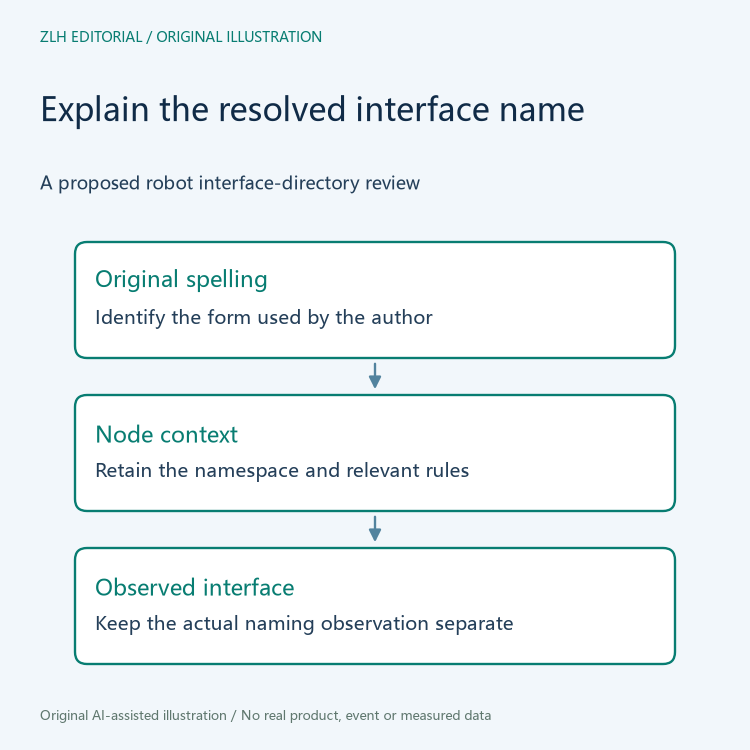
Keep relative and absolute naming contexts visible
The ROS 2 topic and service names design describes relative names as appended to the namespace of the node creating them, while absolute names retain their absolute context. It also explains the private namespace substitution in relation to the node namespace and node name.
A receiving checklist should therefore preserve the applicable namespace context beside a relative name. Do not turn a relative string into a supposed global identifier merely because it is easy to paste into a spreadsheet. The supplier should state which naming form each directory entry uses.
The design document is background for understanding the mechanism. It is not a fresh observation of the delivered implementation. A buyer should ask how the actual software and configuration apply that mechanism, particularly when a supplied example has been adapted for a different system arrangement.
Ask how static remapping changes the interface account
The ROS 2 static remapping design explains why names can be remapped so the same node executable can be reused in different parts of a system. This means an interface account needs the relevant remapping context, not just the default names described by the source author.
Ask the supplier which rules belong to the delivered arrangement and where they are recorded. The reviewer should not assume that a default interface listing remains a complete description after deployment-specific naming changes. Preserve the distinction between documented defaults and the actual configured naming context.
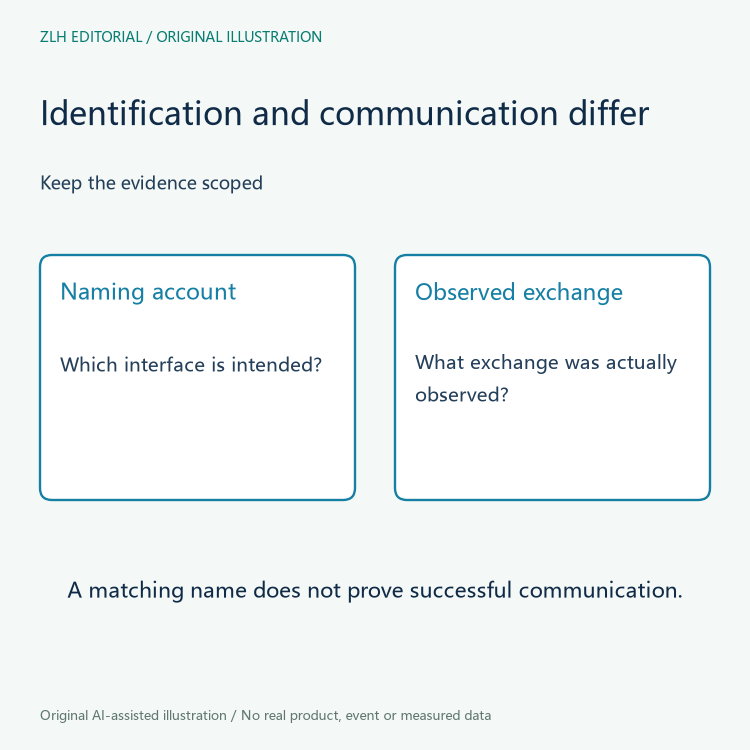
This article supplies no remapping syntax or command for a live system. It does not redirect messages or attempt connections. The acceptance task is to understand the supplied interface description before any separate authorized operational exercise is considered.
Separate naming consistency from communication success
A clear name-resolution account would help the receiver identify the intended interface, but it would not alone establish communication. Other conditions can affect whether participants discover each other, exchange data, or interpret messages appropriately. The checklist should not turn name agreement into a complete connectivity result.
If the supplier later provides a real observation, ask which node instance, configuration, and resolved interface name it concerns. Keep that evidence attached to the observed arrangement. A screenshot from another example should not be used to close an unresolved directory entry.
Where the listed and observed names differ, preserve both before asking for an explanation. Guessing a replacement because its wording looks plausible can lose the relationship the buyer needs to inspect. The supplier should identify whether the difference is intended, revised, or still unexplained.
Accept an interface directory that survives handover
The proposed directory should let another reviewer distinguish original spelling, node context, applicable remapping, and actual observation. It need not pretend that every entry has been exercised. A clearly marked unobserved item is more useful than an unsupported success label.
When the arrangement changes, ask which names and earlier observations require renewed review. Retain the previous configuration with its own evidence. An unchanged executable should not imply that all interfaces retain the same resolved names.
More explanations appear in our robot interface section and the reading directory. Both original diagrams organize naming relationships, without real topic names, robot addresses, message routing, or completed communication tests.


