

Robot Glossary Practice: Preserve SI Prefix Letter Case
2026-11-03
Robot Glossary Practice: Preserve SI Prefix Letter Case
A robotics glossary editor standardizes headings and accidentally changes the case of a unit prefix. The result may look like a harmless style correction while changing the represented scale. Prefix symbols need their own editorial treatment. This method explains how to preserve their identity while organizing glossary entries; it does not convert an actual robot specification or infer a machine's performance from a possibly mistyped source.
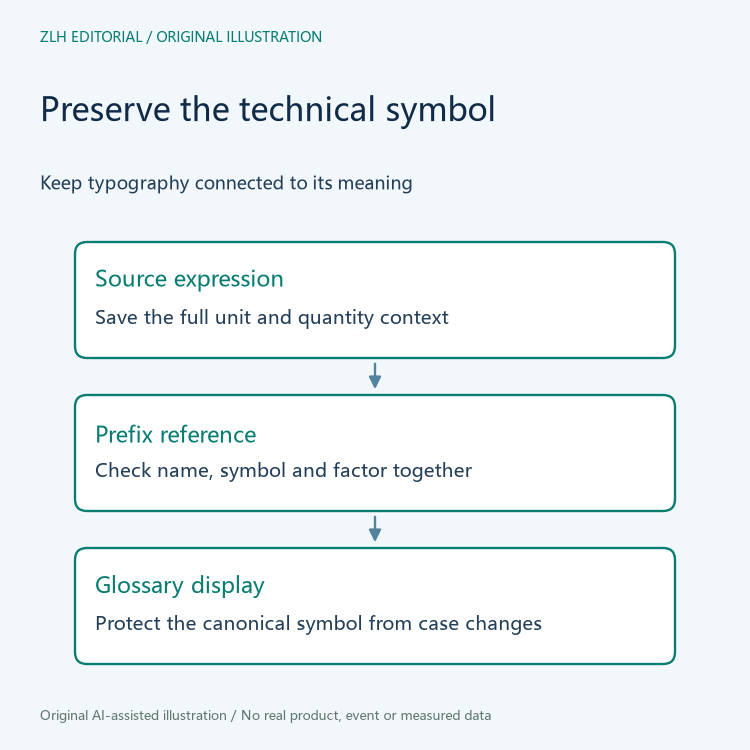
Capture the complete expression before editing typography
Retain the source location, edition and exact visible expression. Keep the unit symbol with its surrounding quantity name and explanation. A single letter extracted from a table can be a prefix in one context, a unit symbol in another or an unrelated variable. The glossary should not assign it a meaning solely from its shape.
Record whether the expression came from selectable text, a scanned image or a manually transcribed note. If the source image is unclear, preserve that uncertainty and seek a better copy. Do not allow an optical character recognition result or an automatic capitalization tool to become the unquestioned authority for the symbol.
Check names, symbols and factors together
The BIPM SI prefix table lists prefix names, symbols and multiplying factors. For example, it identifies milli with lowercase m and mega with uppercase M. Those are distinct entries, not interchangeable styling variants. Preserve the complete relationship rather than storing only a case-insensitive abbreviation.
The NIST metric prefix reference provides another official table and explanatory context. Use it to check the symbol and named prefix together. Lowercase k for kilo is another useful reminder that a glossary's title capitalization policy should not be applied indiscriminately to technical symbols.
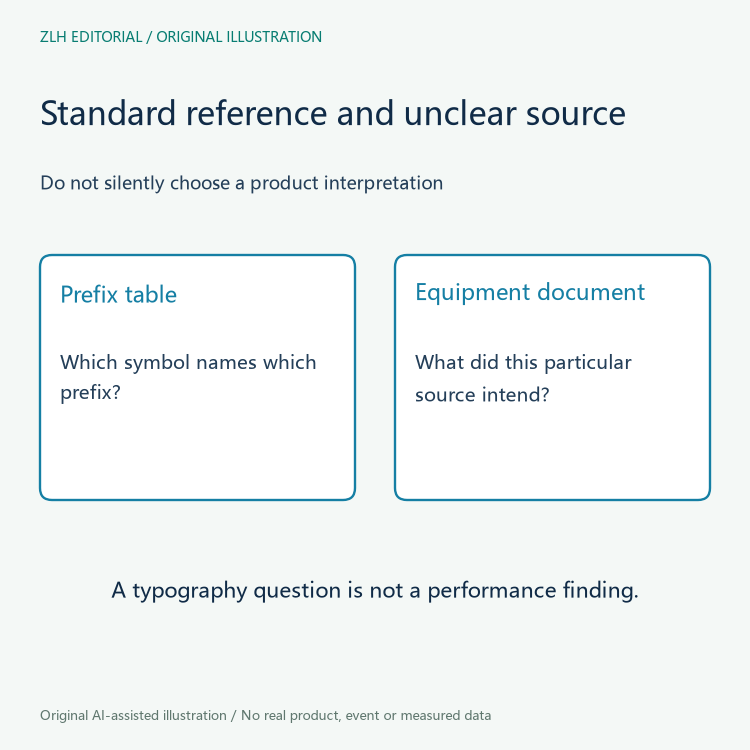
These references explain SI prefixes. They do not establish which prefix an unclear equipment document intended. If a source uses inconsistent typography, do not select a multiplying factor merely because one reading seems more plausible for the robot. Preserve both the source observation and the question for the document owner.
Design glossary records that keep the distinction visible
Store a prefix's name, symbol, factor and source reference as separate fields or clearly labeled parts of the entry. Keep any local search aliases separate from the canonical display. A user may search with different capitalization, but that does not justify presenting distinct prefix symbols as the same term.
Test the editing and display path with controlled glossary material before applying bulk changes. Check headings, navigation labels, exported tables and search result previews. The purpose is to detect whether a formatting step changes a symbol or removes its context. This article reports no test outcome and supplies no actual equipment values.
When a term includes a prefixed unit, retain the full expression in the example and identify what it illustrates. Do not turn a prefix-only explanation into a claimed conversion of a real technical specification. Quantity meaning, source units and any required calculation need their own verified context.
Record a source discrepancy without silently correcting it
If a product sheet appears to use an unexpected case, save the relevant source portion and ask the responsible publisher for clarification. The glossary can explain the standard prefix distinction while leaving the particular product statement unresolved. Avoid announcing a dramatic performance difference from a transcription question alone.
A correction record should distinguish the source's revised wording from the glossary editor's explanation. Keep the earlier version identifiable and document which entry was changed. That permits a later reviewer to determine whether the change addressed typography, a symbol interpretation or an actual revised specification.
Protect technical symbols during later maintenance
When changing a glossary theme, translation process or content editor, recheck how symbol case survives the workflow. A visually attractive redesign can still alter a technical term if a transformation capitalizes all labels. Include the symbol-sensitive parts in the review instructions rather than relying on a general spelling check.
Keep editorial examples modest and explicitly scoped. A glossary entry should help the reader identify a prefix and return to the original technical document for its application. It should not invent machine limits, supplier comparisons or measurement results to make the distinction appear more dramatic.
For collaborative editing, state which fields are protected from automatic case conversion and how an exception is reviewed. Retain the source table reference beside the entry so a future editor can check the decision. A deliberate formatting policy is easier to maintain than repeatedly repairing altered symbols after publication.
The two original diagrams illustrate symbol preservation without copied product tables or measured quantities. Further terminology methods appear in the global robotics glossary collection and article directory. Keeping prefix symbols in their full context makes a glossary more reliable while leaving uncertain product claims with their sources.


